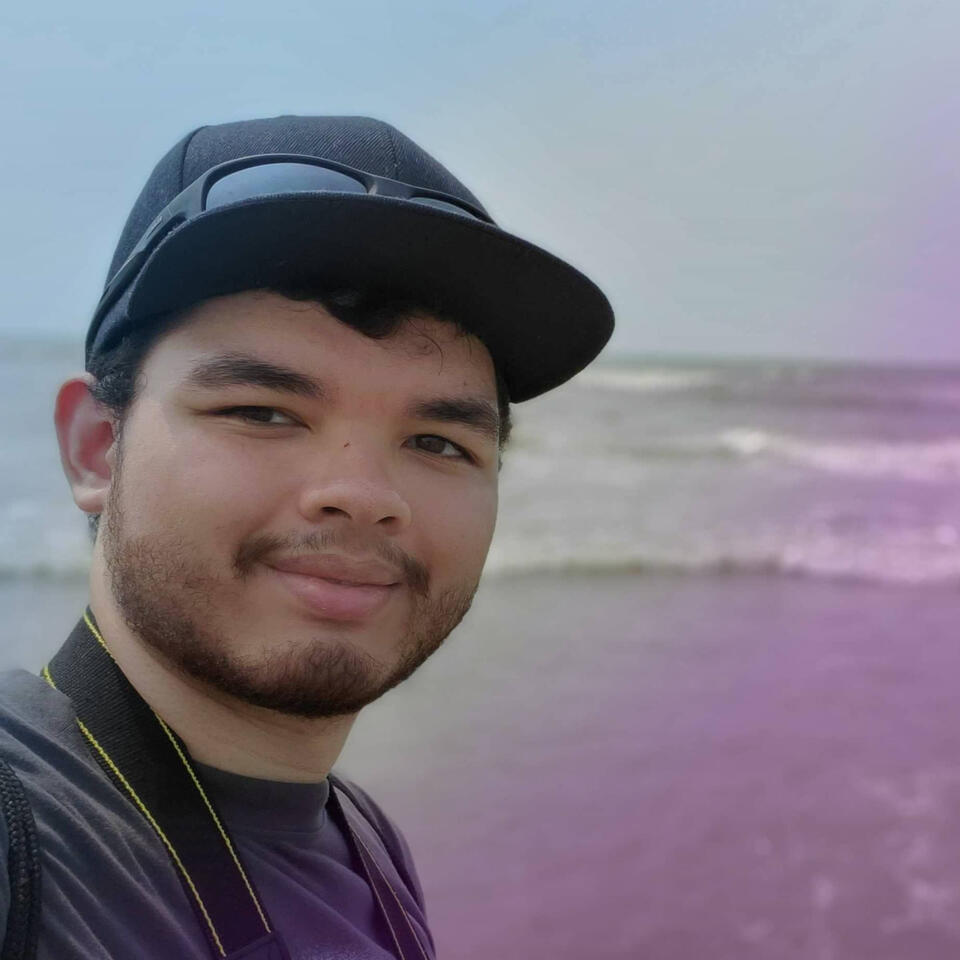
Pilot Light
A Firefly City Story from the creator of Where's Willow?, Bluefire Books, and WebCanids!.
A daredevil pilot, a cautious lighthouse keeper, and a jaded ocean liner stewardess face a world of unknown futures and haunting pasts.
Watch Episodes
Follow the adventures of Alice, Elsie, and Jessie as they explore the mysteries of the world and what lies beyond...
Background
Explore the world of the show, characters, background lore, and more along with historical trivia and bonus content!
Behind the Scenes
Learn about the various disciplines, workflows, techniques, and people involved in the creation of this series!
Support
Help fund production and help the show move forward! Get special access to more insider content and info on Patreon, or make a one-time donation on Ko-Fi!
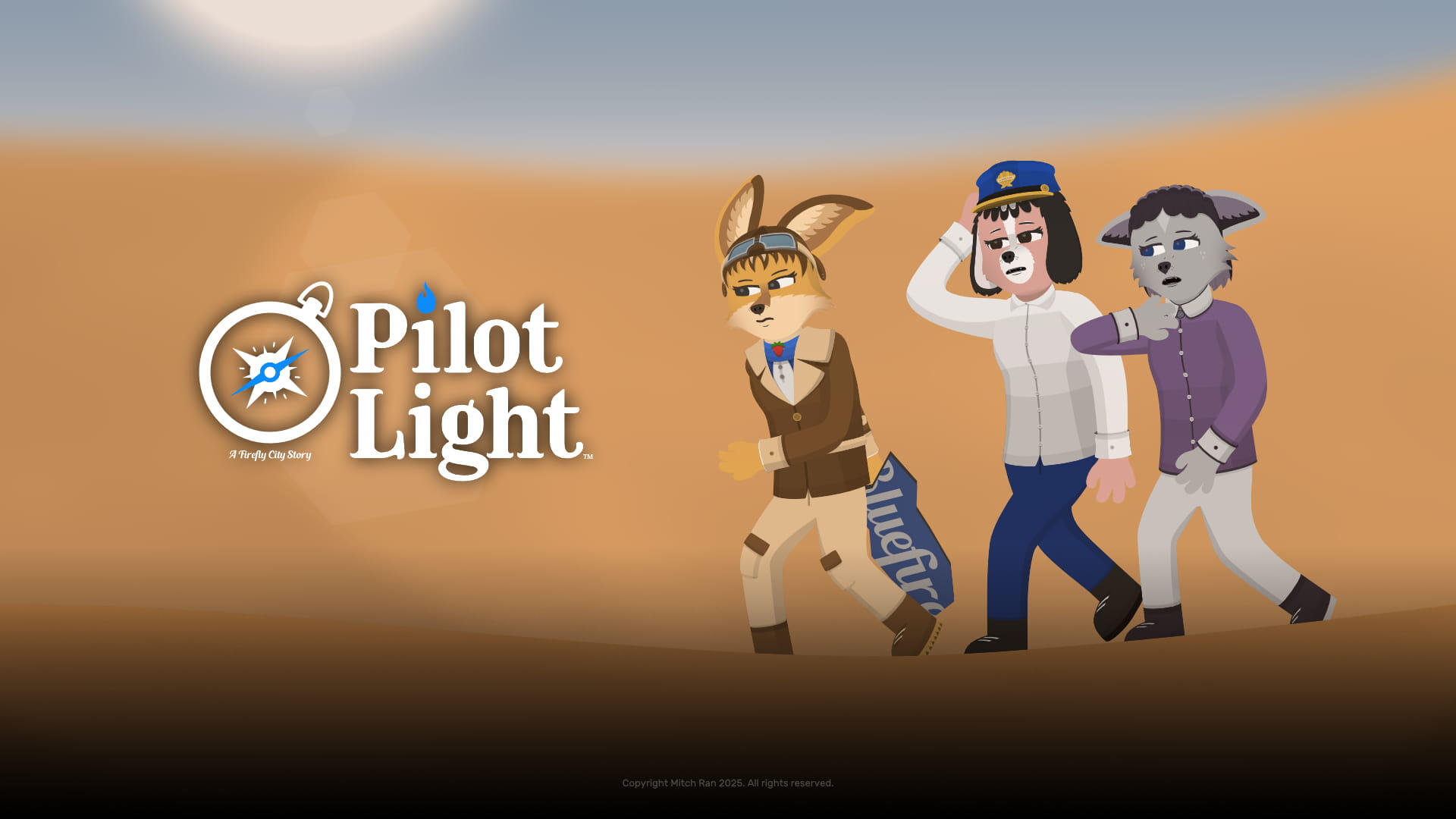
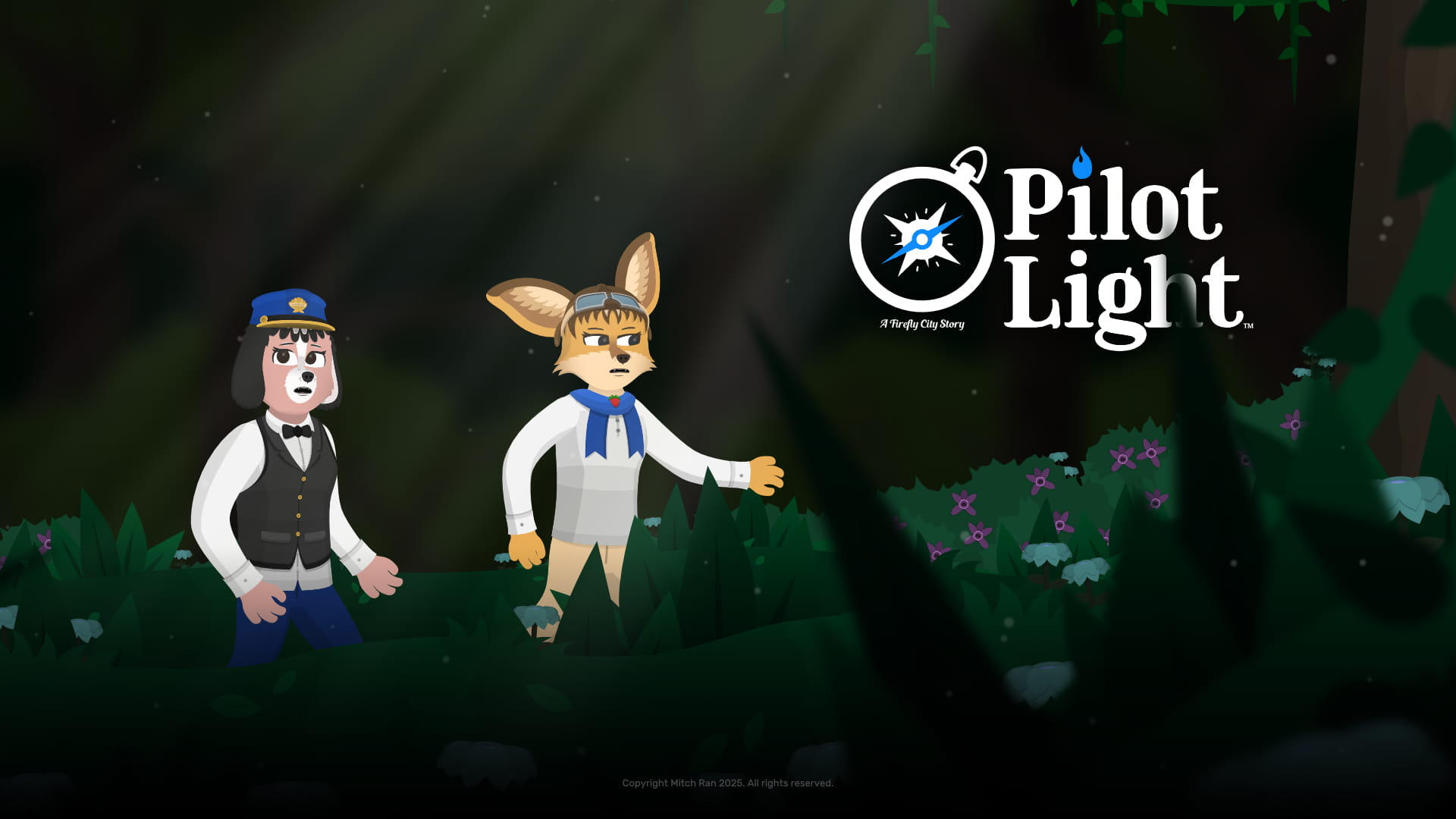
Shop
Grab yourself some series merch and souvenirs from Pilot Light and other past and present Firefly City Stories projects!
Episodes
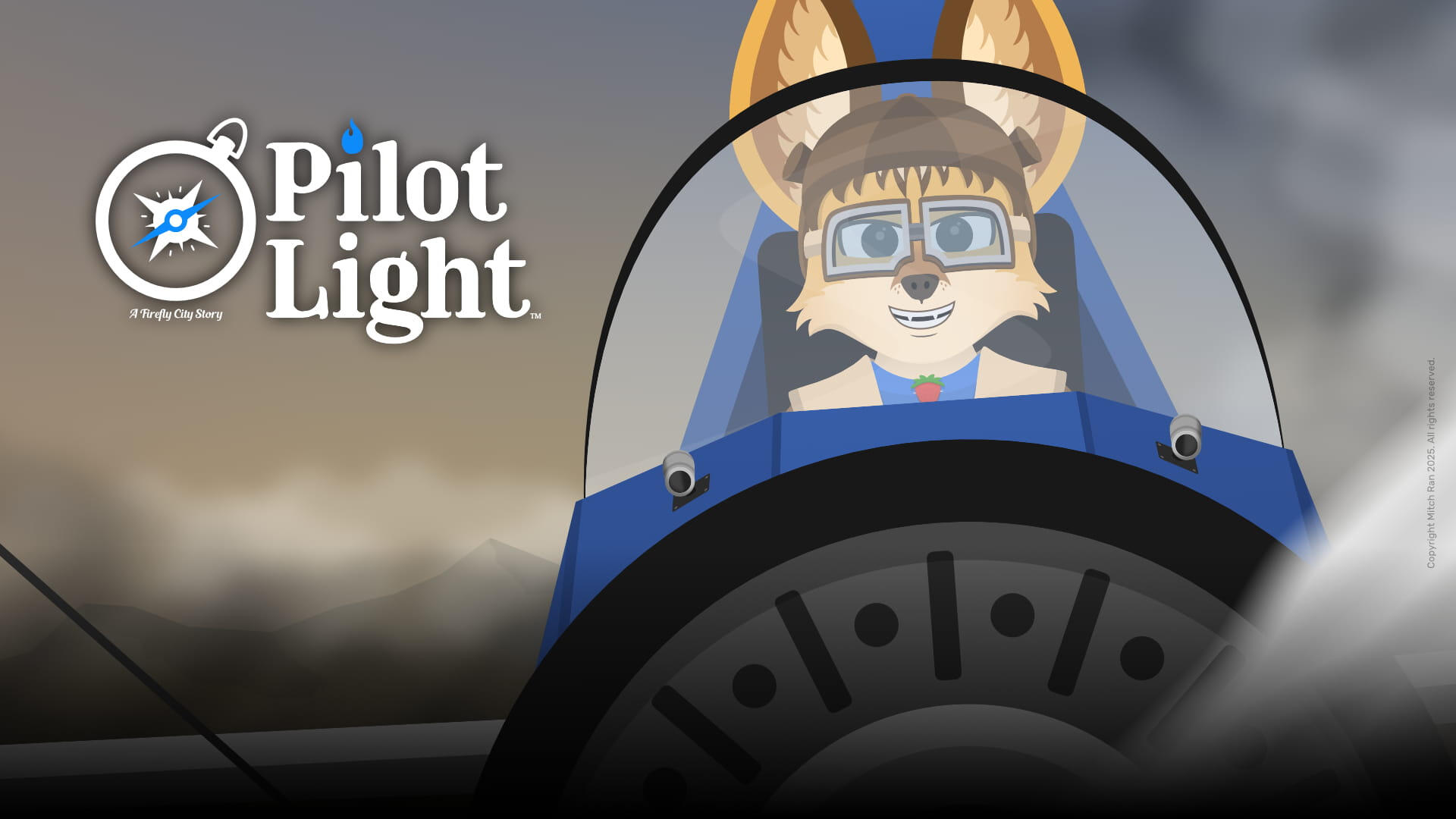
The Crash That Started Everything
Pilot Light - Chapter 1
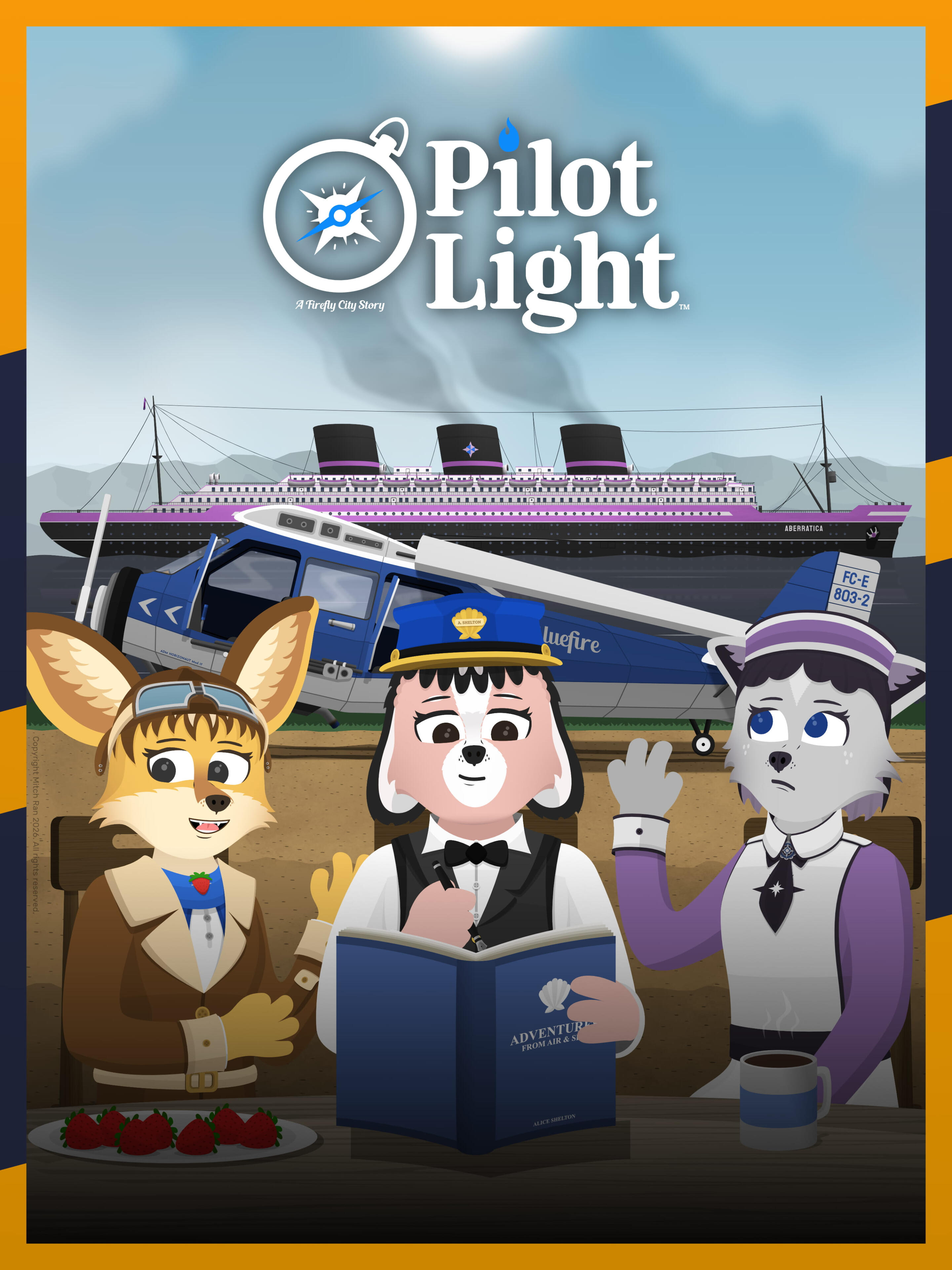
On a tiny island in a faraway sea, a lighthouse keeper’s quiet routine is shattered when a thunderstorm sends a pilot careening into her life. Faced with challenges they were never prepared for, the two soon realize that what at first seemed like the end of an era is actually the beginning of a legendary adventure.
About Pilot Light
A legendary adventure...
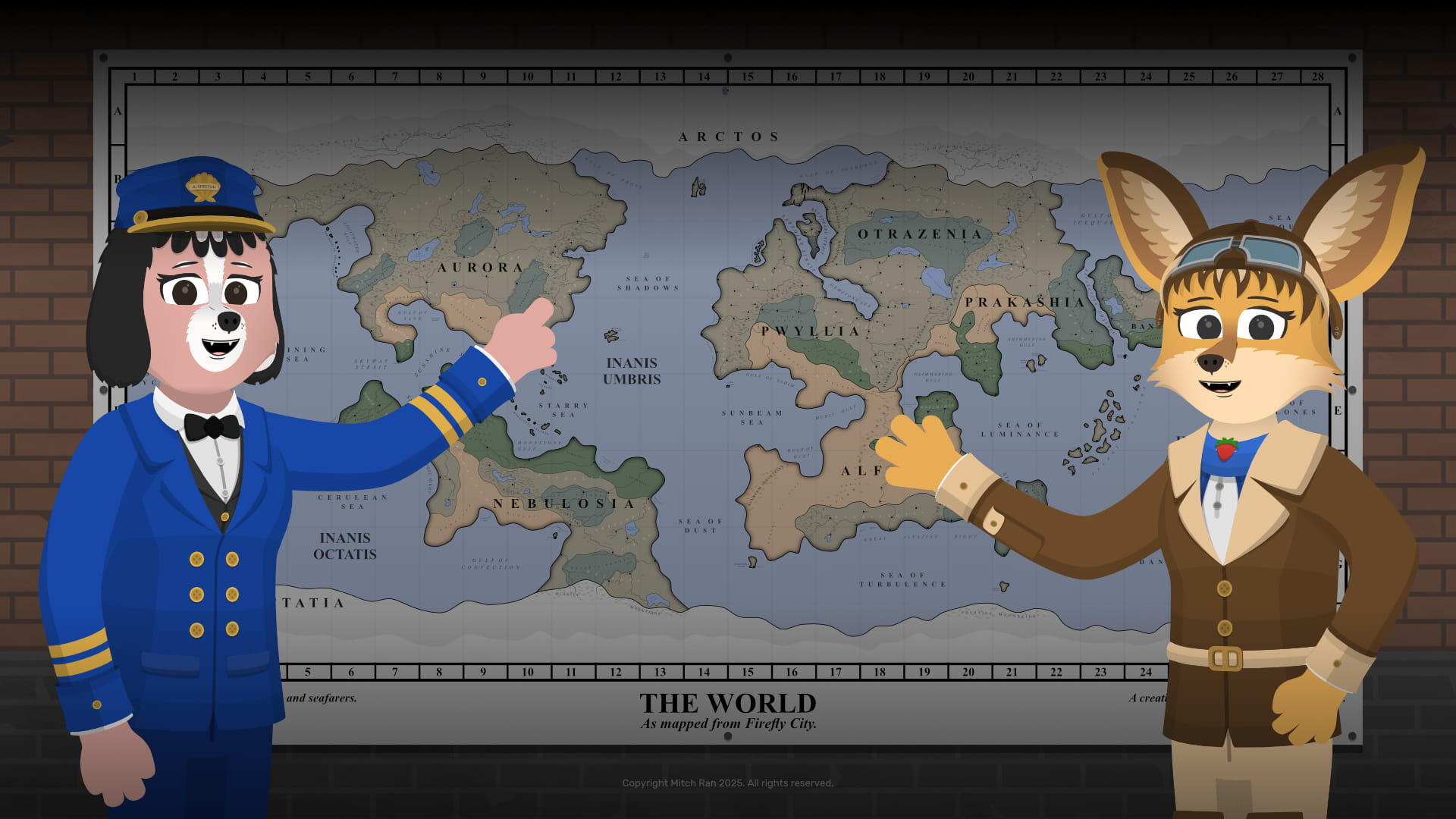
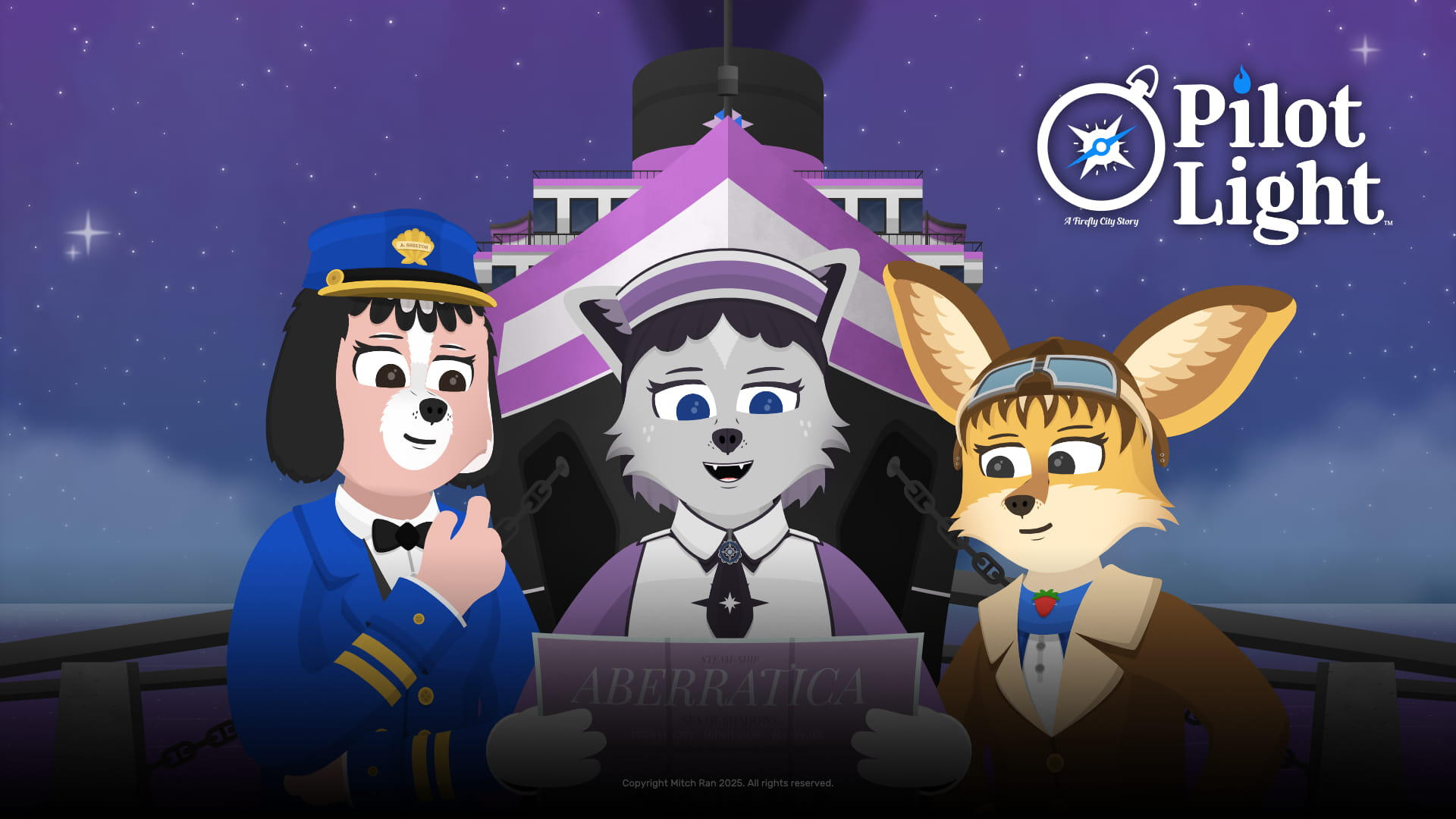
“A daredevil pilot, a cautious lighthouse keeper, and a jaded ocean liner stewardess face a world of unknown futures and haunting pasts.” Pilot Light - A Firefly City Story is an animated cartoon series about the adventures of pilot Elsie Adams, lighthouse keeper Alice Shelton, and ocean liner stewardess Jessie Greenflower as they travel the world and chase their dreams. Finding each other through a string of ordeals, the trio must face a world of hazards, opposition, and shadows from the past. From tiny islands to the big city and the many mysteries of time and space, a limitless future is always just over the horizon... as long as the three friends can stay out of trouble.
This show is primarily adventure-themed, however it also incorporates elements of science fiction and historical fiction. As with all Firefly City Stories, it is intended for young adult and older audiences due to the fact that it covers topics likely to be more relatable to those with more life experience. The show may include flashing lights and loud noises, as well as scenes that may aggravate phobias of deep water (and things in it), heights, airplanes, large objects, extreme isolation, and outer space. “What will you do with the future you find?” This show is an entry into the Firefly City Stories catalogue, an anthology of stories that interlink and build up a common lore.
The World of Firefly City
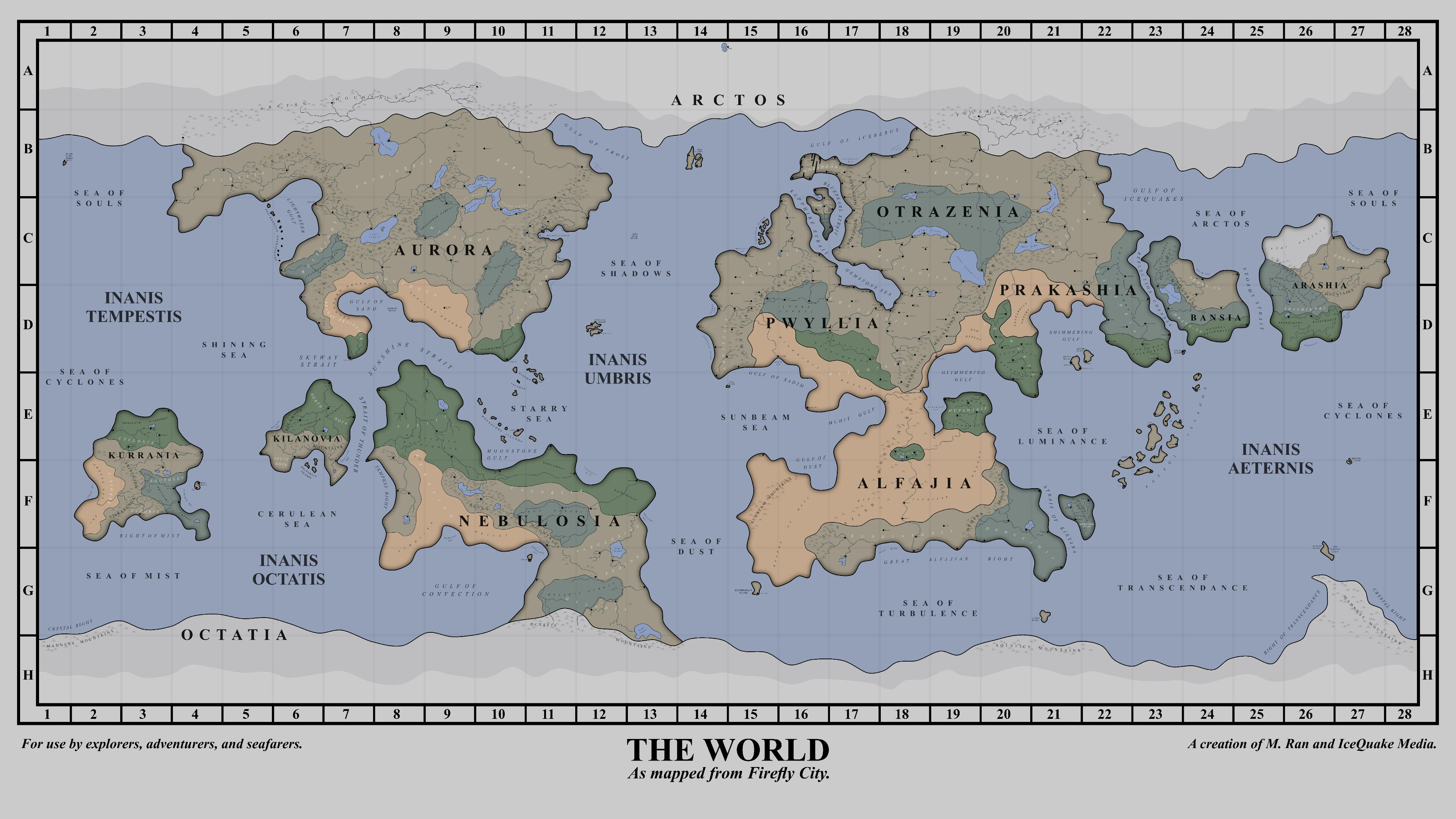
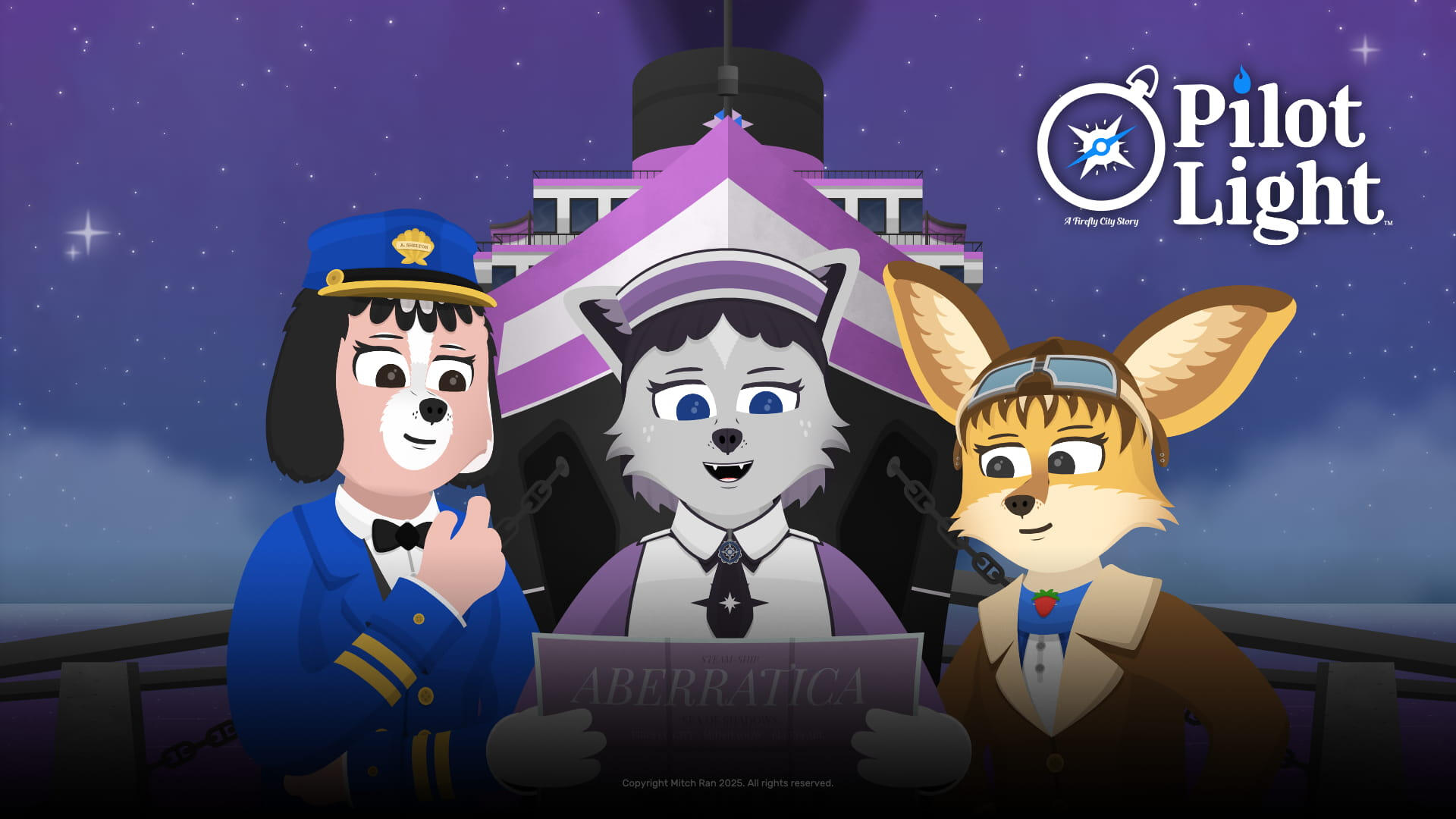
Pilot Light takes place all around the world of Firefly City from the mid-1920's onward. Elsie, Alice, and Jessie explore a wide range of environments, from wide open oceans to dry deserts, dense rainforests, and other, more mysterious frontiers. The story builds on each character's personal background while also establishing some key lore for the world itself, namely regarding technology and the supernatural. There's just so much out there to see and experience... it's hard not to want to go further... and further... from home. More detailed information about the Firefly City, its history and culture, the world, other key locations, and more can be found on the Firefly City Stories website.
Characters
Alice Shelton
Alice Elizabeth Shelton was initially the official lighthouse keeper for Half Moon Island light station. She lived alone on the tiny, remote island while dutifully taking care of herself and the lighthouse. While she was not in any form of major discomfort on the island, she couldn’t help but wonder if there was more to life than what she was living. Having lived on the small island for most of her life, Alice hadn’t had much contact with the wider world. Even the number of passing ships was low, with only a few going by within view each year. She was raised almost entirely by her father Arthur who was lost in a storm on her 15th birthday. When she returned as an adult a few years later to take on the role of lighthouse keeper, her memories of the merciless ocean grew into an ever-present anxiety. She was extremely cautious around the water, and though she secretly wished to see what lay beyond the horizon and write the ultimate adventure story, she was afraid to step off dry land; a phobia which threatened her ability to do the rescue portion of her job. Alice's character is partly inspired by notable women lighthouse keepers of the past such as Ida Lewis, Abbie Burgess, Elizabeth Williams, Fannie Salter, and Katherine Walker. She is also partly inspired by Frankenstein author Mary Shelley.
A voice acting casting call will be held for Alice and other characters in the future (TBA).
Elsie Adams
Elsie Zerda Adams was an exploratory airplane pilot (a term of the time period would be “aviatrix”) based out of Firefly City. Originally from a family of strawberry farmers in the Garnet Plains region of the Commonwealth of Aurora, she traveled across the country in her pioneering aerial exploits. Having gained considerable renown for previous flights over treacherous inland areas such as the Sunglass Desert and the Starlight Mountains, Elsie wished to explore the most unknown reaches of the world by air- and also to invent the ultimate aircraft along the way. Though her records were impressive and her goals of adventure and invention were lofty, she had many detractors who criticized her for not helping more with her family farm (though her family supported her wholeheartedly). Those who doubted her described her as reckless and stubborn, and argued that she was abandoning other responsibilities for selfish reasons. Sometimes, she couldn't help but believe them... Elsie's character is partly inspired by legendary early women aviators such as Amelia Earhart, Neta Snook, Lady Mary Heath, and Lady Bailey.
A voice acting casting call will be held for Elsie and other characters in the future (TBA).
Jessie Greenflower
Jessica Florence Greenflower was initially a stewardess and nurse aboard the ocean liner SS Aberratica, her area of focus being first class cabin service and first-aid assistance. At times, she helped with holiday photography for tourists, as she also had skills with a camera. Though Jessie was dedicated to her job which she used as a means to support her family back on the Isle of Sapphire, she frequently found herself frustrated with her occupation and the encounters she had with travelers, coworkers, and even the work itself. Over time she became a bit cynical, preferring to stay to herself rather than place too much confidence in her circumstances or those around her. This in turn made it difficult for her to form and maintain meaningful relationships, romantic or otherwise. All Jessie wanted was to find peace in a simple, stable life, and (though she wouldn’t admit it) to not be alone in doing so. Jessie's character is partly inspired by a combination of RMS Olympic / RMS Titanic / HMHS Britannic stewardess, V.A.D. nurse, and survivor Violet Jessop as well as legendary nurse Florence Nightingale.
A voice acting casting call will be held for Jessie and other characters in the future (TBA).
More character information will be added once they are revealed in the story!
Technology

Skyspark
Skyspark was Elsie Adams’ first owned airplane that she learned to fly in as a crop dusting pilot. She eventually took ownership of it and began to use it for barnstorming and exploration, making a name for herself along the way.• Callsign: Skyspark FC-E 803 (Firefly City Exploratory Airplane 803).
• Model: Custom ADM Bluehawk Model 04 (ADM = Auroran Domestic Motors)
• Format: Single-engine biplane with internal passenger or cargo compartment. Custom rear landing wheel instead of skid.
• Inspirations: Classic biplanes such as the Curtiss JN ("Jenny") and "Canuck" variants, Boeing Model 40, and the de Havilland DH.60 Moth.

Bluefire
Bluefire was Elsie Adams’ second owned aircraft that she acquired through a lease buyout while working with Alice. This was the primary aircraft that they used in their adventures together, eventually adding a third seat for Jessie as well as other, more experimental modifications.• Callsign: Bluefire FC-E 803-2 (Firefly City Exploratory Airplane 803-2).
• Model: Custom ADM Horizonaut Model 17 (ADM = Auroran Domestic Motors)
• Format: Folding wing, closed-cabin multiseat aircraft with glider influences.
• Inspirations: Utilitarian aircraft from the mid-to-late 1920's and 1930's such as the Fairchild 71, Lockheed Vega, and the Fokker F.VIIb (particularly the Southern Cross).

S.S. Aberratica
The S.S. Aberratica was a luxurious ocean liner that primarily served a route across the Sea of Shadows between the ports of Firefly City, Midshadow, and Bluepearl (see map above). Jessie served onboard as a stewardess along with several coworkers such as Tabitha, Sidney, and Chief Steward Victor Candin. The ship itself was involved in numerous experiments and technological tests, some of which were more risky than others.• Company: Gem-Star Line.
• Format: Three-funnel (one dummy for heat dissipation), four-turbine ocean liner.
• Inspirations: Golden-age ocean liners from the 1920's and 1930's such as the SS Île de France, SS Normandie, and the SS Bremen. Also (although to much lesser extent) earlier ships such as the RMS Titanic, RMS Olympic, and HMHS Britannic, namely in some trivialities such as the dummy funnel and air intakes.

A.E.V. Skycastle
A.E.V. Skycastle was an airship under test operation for potential use in various scientific experiments as well as for potential applications to long-distance travel. Though it was luxurious and awe-inspiring, it was prone to safety and control issues, and as such those aboard often came away with harrowing stories.• Callsign: Auroran Experimental Vehicle (A.E.V.) Skycastle
• Format: Large lighter-than-air ship with one underside bay for a singular small biplane trapeze system.
• Inspirations: Airships of the 1910's-1930's. Shape and style is inspired by American airships such as the USS Macon, USS Akron, and USS Shenandoah. Controls are inspired by those within German airships such as Graf Zeppelin and Hindenburg. Boarding and mooring procedures are particularly inspired by British airships such as R100 and R101.

A.M.V. Rayleigh Sky
The A.M.V. Rayleigh Sky was a steam freighter designed to carry cargo across oceans such as the Sea of Shadows. A combination of low freeboard, lax maintenance, and poor working conditions made the ship particularly prone to bad luck.• Company: Candlewick Conglomerate
• Format: Single-funnel steam freighter.
• Inspirations: Early 20th-century steam freighters. In visual appearance, ocean freighters ("salties"). In lore and circumstances, Great Lakes freighters ("lakers").
• Name Origin: A.M.V. = Auroran Merchant Vessel. The ship is named for Rayleigh scattering which makes Earth’s skies blue or orange depending on, essentially, the time of day.

Lighthouse Tender Vessel 551
The Auroran Lighthouse Board and Auroran Department of Daily Hazards once utilized lighthouse tender vessels to transport and supply lighthouse keepers across the nation's lighthouse network. These vessels were small and rather simple, but nevertheless they were critical to early Auroran maritime operations and safety.• Administration: Auroran Lighthouse Board (A.L.B.) and Auroran Department of Daily Hazards (D.D.H.).
• Format: Single-funnel steam lighthouse tender vessel.
• Inspirations: Early 20th-century lighthouse tender vessels and USCGC Ida Lewis (WLM-551).

Half Moon Island Light Station
Half Moon Island is a tiny, remote island which sits in the middle of the Sea of Shadows. The island gets its name due to its shape, which from the air resembles a half moon, chevron, or crescent moon, depending on the tide. There is a lighthouse station (Lighthouse 22) on the island, along with a house for the lighthouse keeper. There is a shed for storage, a water cistern, a windmill for plumbing, and a vegetable garden. The northern, western, and eastern shores of the island are rocky and covered in pine trees, while the southern shore has a very small beach and a wooden dock.• Location on Map: C13.
• Administration: Auroran Lighthouse Board (A.L.B.) and Auroran Department of Daily Hazards (D.D.H.).
• Daymark: Round white and blue stone block tower with blue stripe and blue roof. Large designation "22" painted on cardinal sides. Roughly 35m in constructed height; 40m in true elevation from sea level.
• Light Color: Lumen oil blue.
• Lamp and Lens: Incandescent lumen oil vapor lamp and second/third order Fresnel lens.
• Power Source: Candlewick lumen oil.
• Range: 28 nautical miles.
• Inspirations: The island is largely from pure imagination, though some general inspiration did come from lighthouses such as the legendary Tillamook Rock Lighthouse, Maine's Boon Island Light, and Prince Edward Island's East Point Lighthouse.
Behind the Scenes
Ready for takeoff!
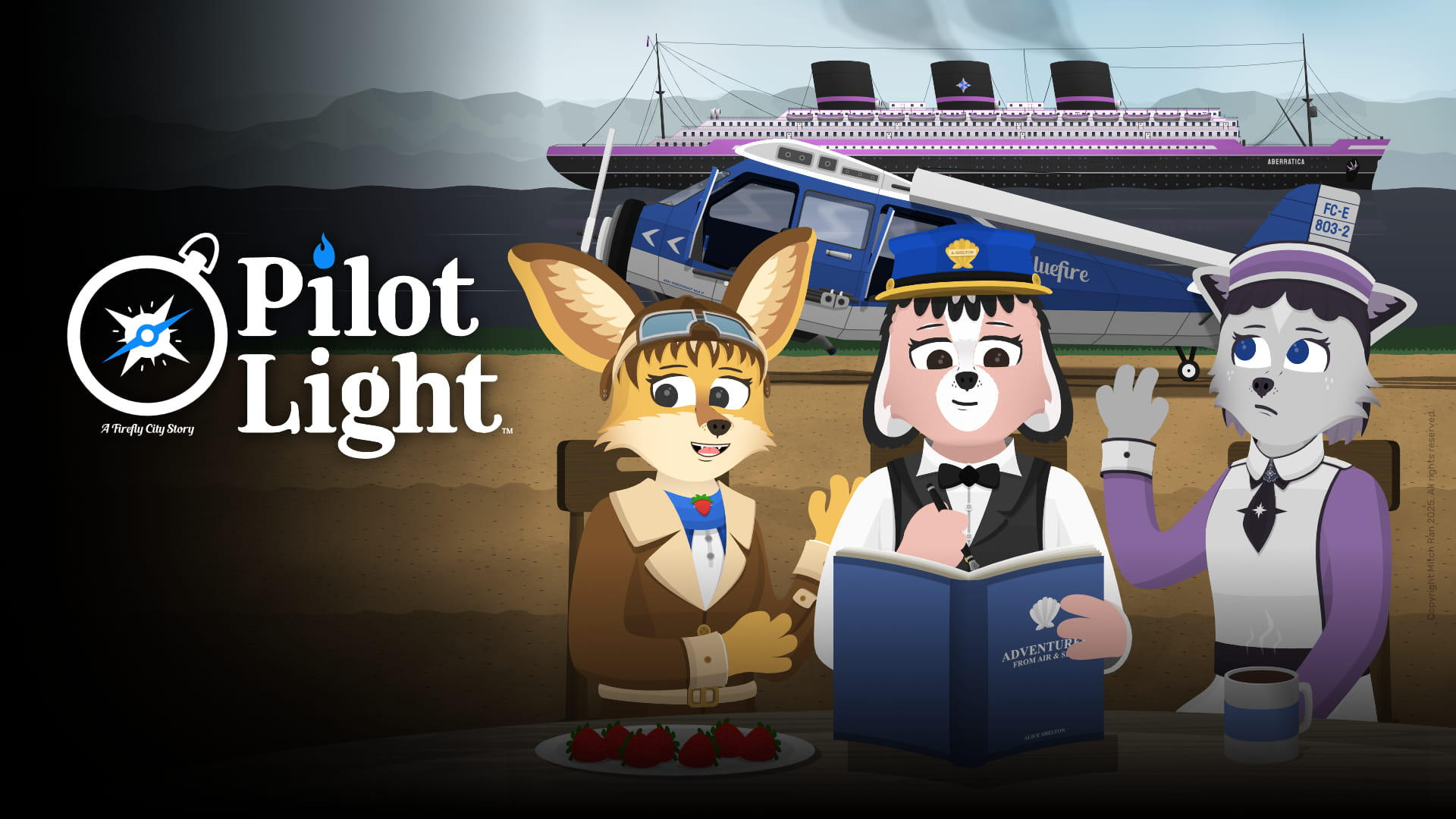
Pilot Light - A Firefly City Story is a largely solo project (except for voice acting) created by me, Mitch Ran (hi!). There were a lot of thoughts and ideas that went into the creation of this story, and it has evolved quite a bit from its first version. My motives for making Pilot Light can be broken down into three main categories:• Establishing Worldbuilding and Lore
• Since starting work on Firefly City Stories back in 2019/2020, I've constantly been thinking about the wider world of the stories I tell. Firefly City has always been intended to be just a small part of a much larger moving picture, with other cities and situations unfolding near and far. Things like natural and supernatural rules, timelines, and the overall map of the world have been something I've found to be fun to think about, but hard to include in stories without them feeling forced. Pilot Light in a sense is a story specifically intended to help with that, as it explores a wider part of my fictional world and the things that have happened in it over time. It also lets me lay the groundwork for more future planned projects, as I like to interlink the stories that I tell.• Presenting Alternative History in a Fun Way
• During the early stages of conceptualizing the show (especially chapter one), my research kept leading me to people, mainly women, who have had major impacts and interesting stories. While Amelia Earhart has always been my favorite historical person, stories like that of Violet Jessop and Ida Lewis were new to me but very inspiring. The more I learned, the more I wondered what it could have been like if they had crossed paths, seeing as in some cases their lifetimes overlapped. How would they get along? What would they talk about or do? The idea gradually morphed into a core theme of the show, and this was definitely the best evolution of the story. I got to learn new things and gain a new appreciation while finding ways to develop characters and arcs and present them in a fun way.• Having Fun with Historical Technology
• I have always been interested in historical transportation methods such as classic airplanes, ocean liners, and cars as well as classic science fiction and the origins of space exploration. Pilot Light gave me the chance to design my own historical technology based on what I've learned about these topics, such as my own custom ocean liner, several golden-age aircraft, and more. It has been extremely fun and I've gotten to really compare and contrast the inventions of the past with what exists today, and the things I learned in the process in turn helped me come up with even more story ideas and arcs. It also gave me an excuse to visit some very cool places during the research stage. This page covers the production process for Pilot Light - A Firefly City Story. It includes some key software and equipment used, as well as some rundowns of how everything is implemented. If you've seen my previous animated series, Where's Willow? - A Firefly City Story, you may notice it's pretty much the same pipeline. You can see even more behind-the-scenes process screenshots, recordings, notes, and more on the Firefly City Stories Patreon page!
Background
• Are any things in this show based on real life?
• The main three characters and some of the events that happen to them are inspired by (but not direct retellings of) real history.
• The main inspirations for Elsie, Alice, and Jessie are Amelia Earhart, Ida Lewis, and Violet Jessop, respectively, however there are several other inspirations for each character as well. Overall, each character is a mix of archetypes with some references included, and others left out.
• Events are fictional, though they do in some cases allude to real experiments, tests, and situations.
• As with all Firefly City Stories projects, these references are generally very abstracted. You can learn more about inspirations on the show info page.• Who is the intended audience?
• Pilot Light - A Firefly City Story is intended for young adult (16+) audiences and older.
• It is targeted primarily towards those who enjoy adventure stories, historical fiction (mainly focused on transportation technology between 1910-1939), and science fiction, as well as stories about coming to terms with how your own dreams and actions fit into the wider world.• How is this show funded?
• This show is primarily self-funded out of pocket, though grants may be sought as appropriate. Costs are kept down primarily due to the fact that aside from voice acting, it is a solo, self-made project. It does have a few crowdfunding options (Patreon and Ko-Fi) available for donations, which are much appreciated. There is also a merchandise store.• What genre is the show?
• Pilot Light - A Firefly City Story is an independent (“indie”) animated production. It includes elements of adventure, science fiction, comedy, horror, tragedy, and on-again/off-again romance.• When will the show release?
• Episode release dates are to be determined, however updates on production and background information will be released on an ongoing basis from now until release.• Where can the show be watched?
• The show’s main episodes will be published on YouTube and Newgrounds. Any supplemental content will also be shared on platforms such as Instagram, Bluesky, and similar platforms.• What will happen after the show is finished?
• Firefly City Stories (the parent project of Pilot Light) includes other interlinked stories. They will continue to be made and published into the future.
• I have already begun work on the next animated project. It's a secret for now, but there are hints in Pilot Light. Even from the first episode. ;)• Any other notes?
• There is absolutely zero use of generative artificial intelligence in any part of the show or related material whatsoever. Doing so would defeat the purpose of working on Firefly City Stories in the first place.
Writing
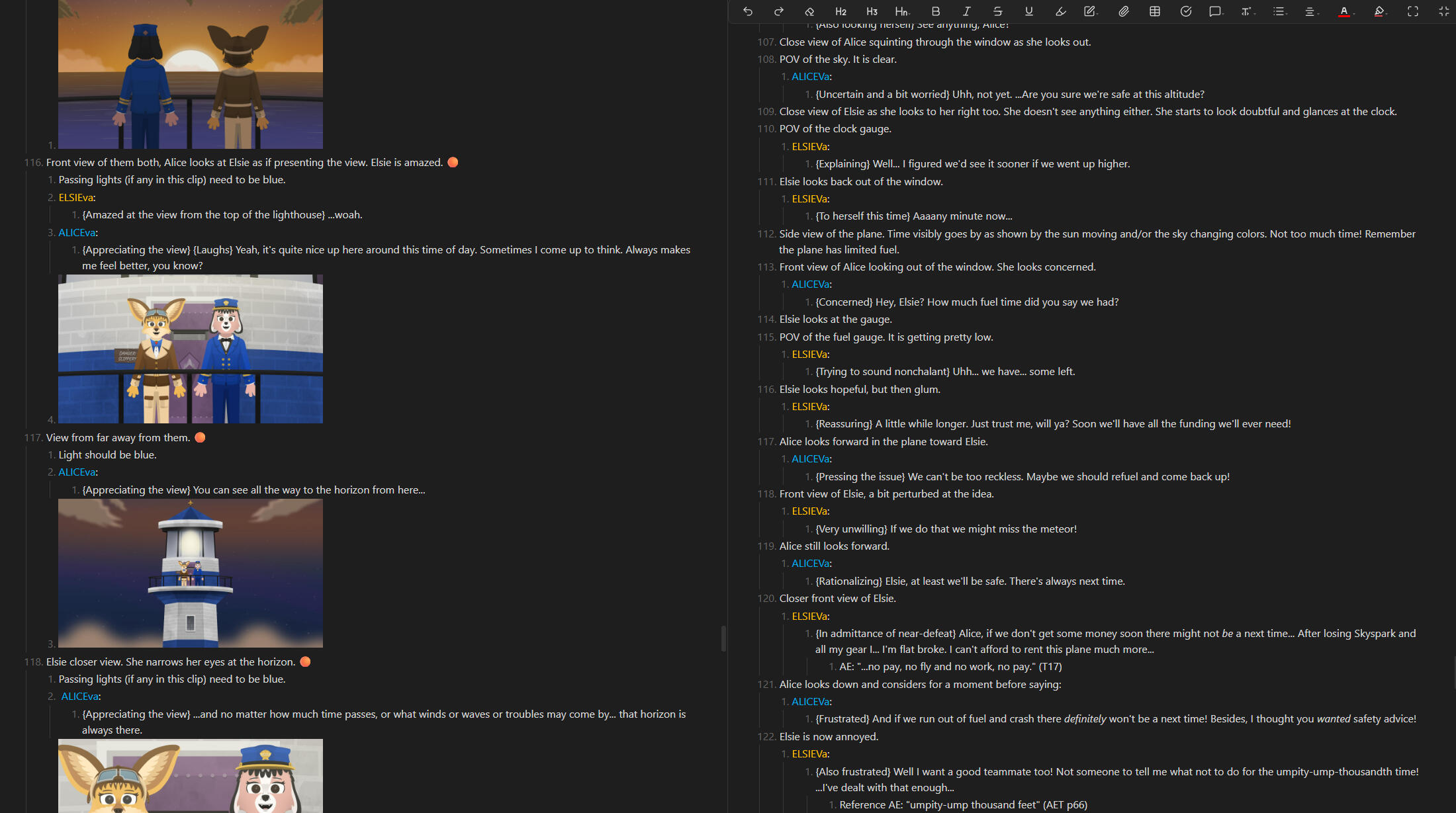
I write my initial scripts using the notes program Obsidian (similar to Notion but without the forced AI slop). I eventually transfer scripts over to a slightly more standardized screenwriting format using Google Docs and work on and export the final versions from there.Since I do the writing and artwork myself, I often continually develop the artwork and script simultaneously after their initial drafts, resulting in my version of a storyboard. Rather than rough sketches, the artwork is usually near-complete, and character rigs are simply staged within the pieces.When jotting down quick ideas and notes, I often use a private Discord server (with just myself in it) which is quickly and easily accessible. Nothing stays in there for long though.Shown here: The storyboard/script combination for part of Pilot Light Chapter One, alongside part of the script outline for Pilot Light Chapter Two. As with my other animation projects, the script outline is written first, which guides the artwork, which guides edits to the script, and so on. It's more efficient for me as a solo creator to put them together in one document.
Artwork
As with all Firefly City Stories projects, I make all digital artwork in vector form, starting with basic shapes and then adding details, textures, and organized layers to create more immersive scenes. Since I work in vector, I can adjust the shapes, colors, proportions, and so on of my creations and use them over again as needed. This lets me save time and keep the originality, legitimacy, and consistency of my work.To make my artwork, I use Affinity Designer 2 (discontinued but I still prefer it) to create almost everything, and Krita for the rest.Shown here: The art development process for Half Moon Island as seen from the south. I start from basic shapes and then develop each setpiece, leaving notes to myself on what I want to add, how to optimize things for animation, and specific needs for specific scenes.
Characters and Animation
I create and use 2D puppet rigs, one of the five types of animation, which involves slicing characters into pieces (arms, legs, body, facial features, and so on) and rigging them to be moveable and poseable (with keyframes). I create my character designs in the same way as all of my other art.My main animation software is OpenToonz (through Tahoma2D).Shown here: Animation of Alice for a clip from Pilot Light Chapter One. Each white dot is a keyframe for a different body part. Green meshes allow the rig to bend using (unseen in the GIF) bones.
Voice Acting, SFX, and Music
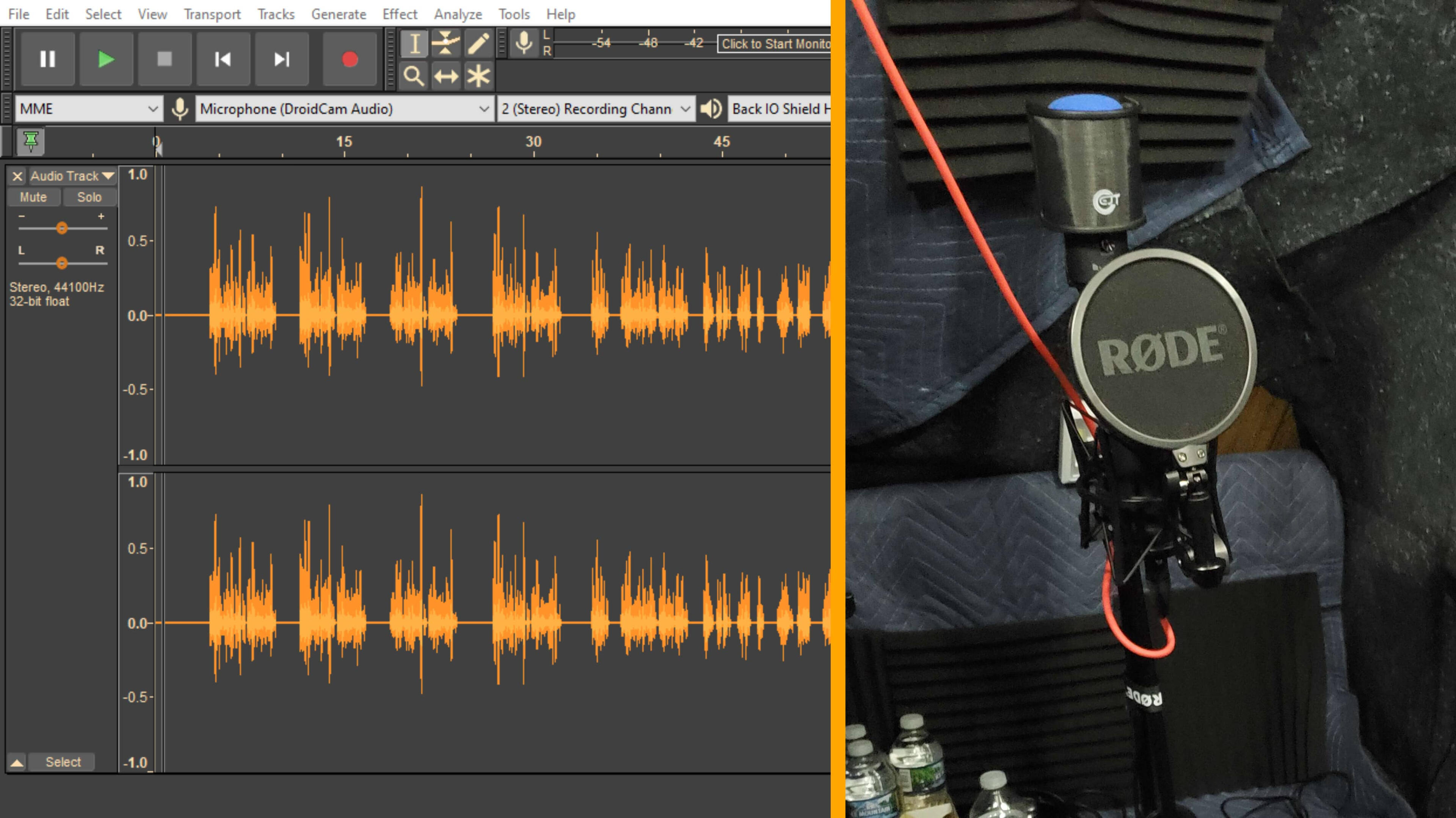
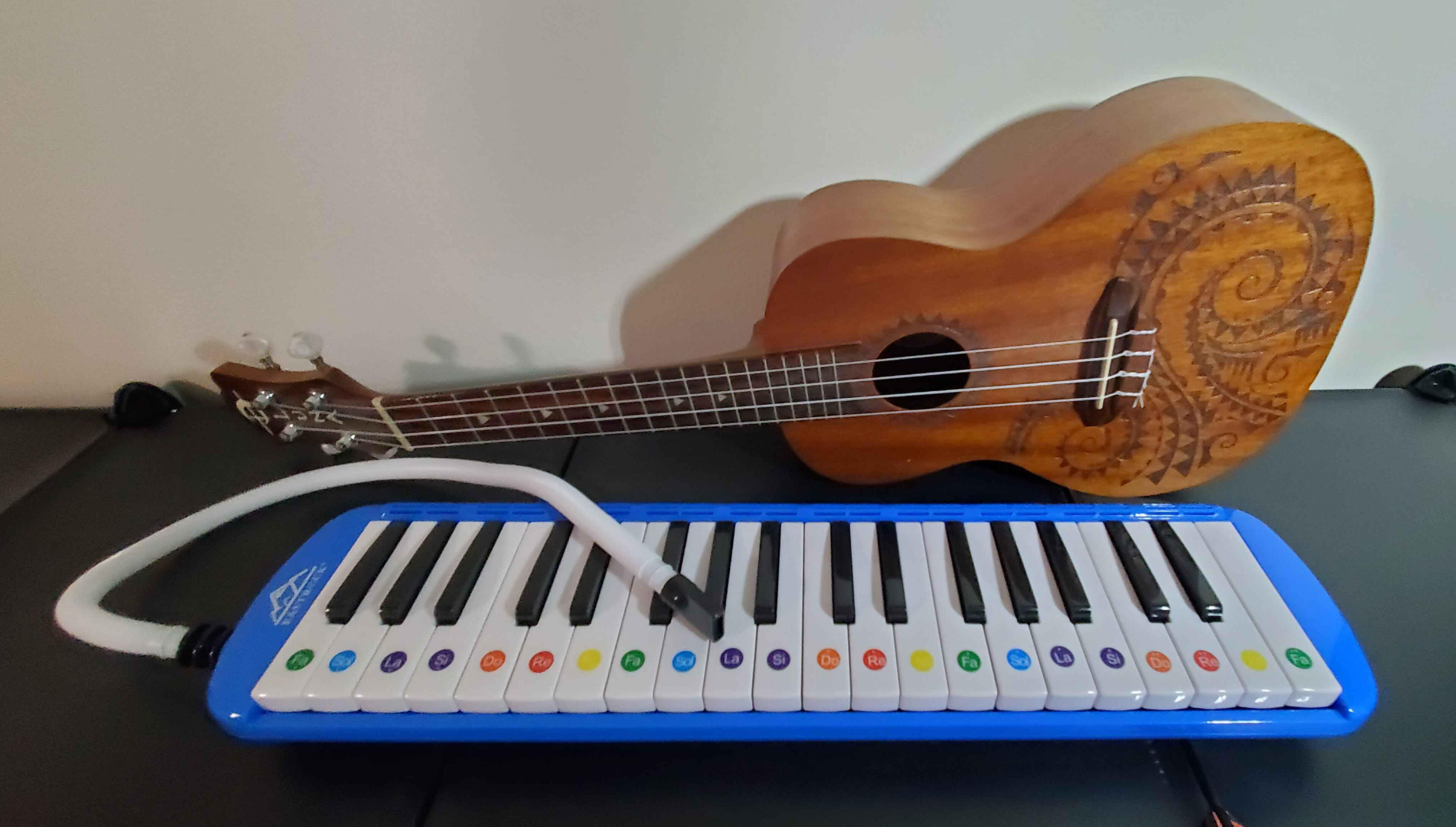
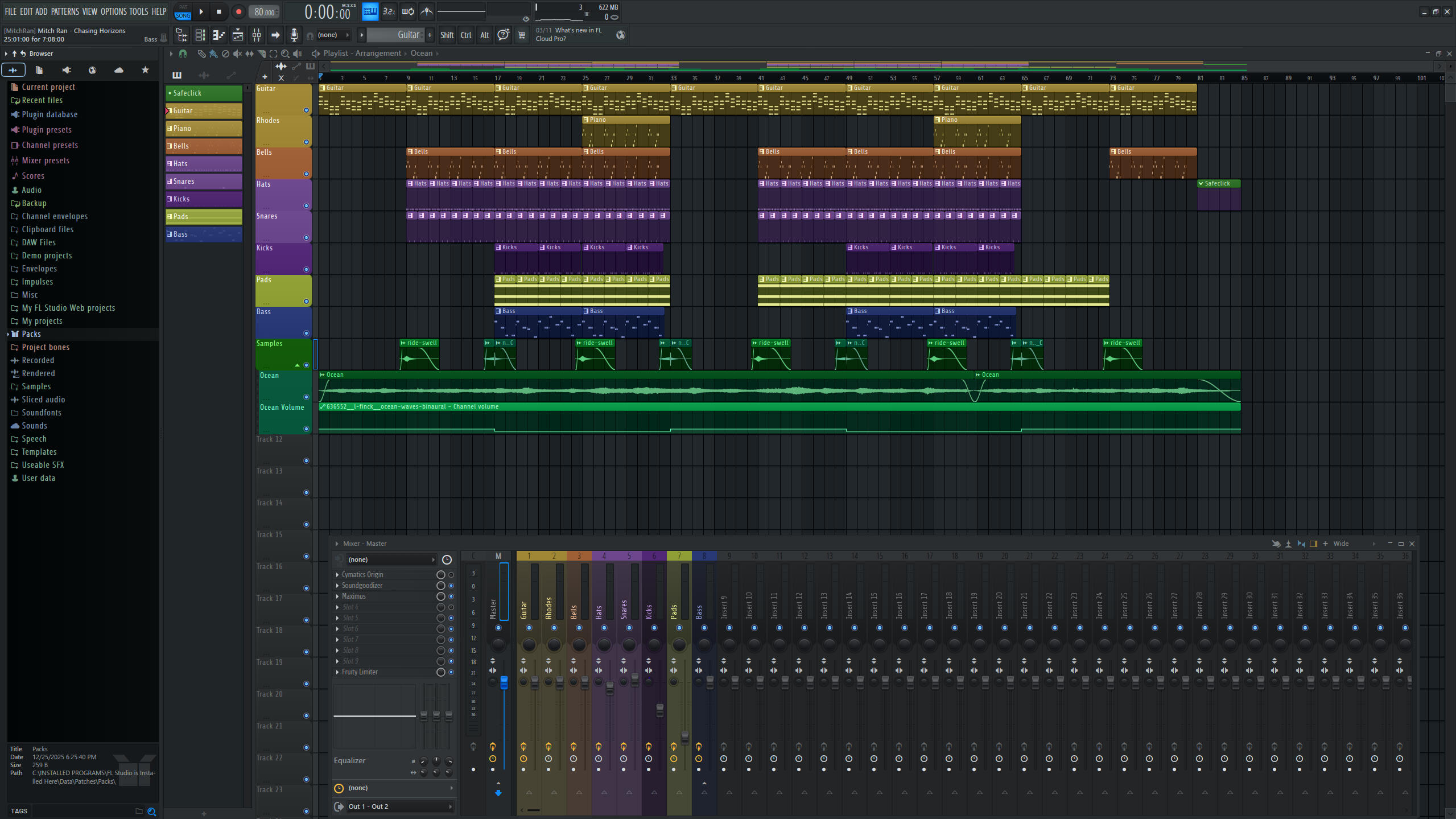
Voice Acting:Most voice acting for this show is intended for voice actors that will be cast at a future date.I myself voice a handful of background characters, such as the radio host John Tilden and other miscellaneous incidentals.I record using a Rode NT1 5th-generation condenser microphone, although sometimes I also use a Samson Q2U dynamic microphone or even a Fifine K670B condenser mic. I process recordings through a Focusrite Scarlett Solo using Audacity (v2.4.2), and add pitch, reverb, and cleanup effects in FL Studio and Davinci Resolve. To monitor audio, I use a pair of Beyerdynamic DT-770 Pro 80Ω headphones, with a pair of Audio-Technica ATH-M20x's as a backup.SFX and Foley:For sound effects and foley, I primarily either record them myself, or license them. A few miscellaneous sounds are from Freesound as well.Music:For Elsie's harmonica and Alice's ukulele, I play and record these in real life (although for Elsie I actually play a melodica because it's a little easier). I am still a relative novice at these instruments, so it's a very fragmented process, lol. Jessie's occasional piano playing is done digitally in FL Studio, along with the overall composition.The reason the harmonica (by proxy) and ukulele are featured is that they were growing in newfound popularity in the 1910's-1930's.Digital music production has always been a hobby of mine. I try to focus on repeating motifs and sounds while also allowing for versatility to suit different moods. You can find all of the music I've made down below, as well as on most other music streaming platforms!Shown here:Top: An older Audacity recording screenshot and one microphone configuration I have used.Middle: The ukulele and melodica I use for some of the music in this project. The instruments aren't super high-quality, but they get the job done lol.Bottom: The arrangement for one of the songs that I actually composed as a standalone, but ended up adding to the pool of songs for use in Pilot Light.
Editing and Compiling
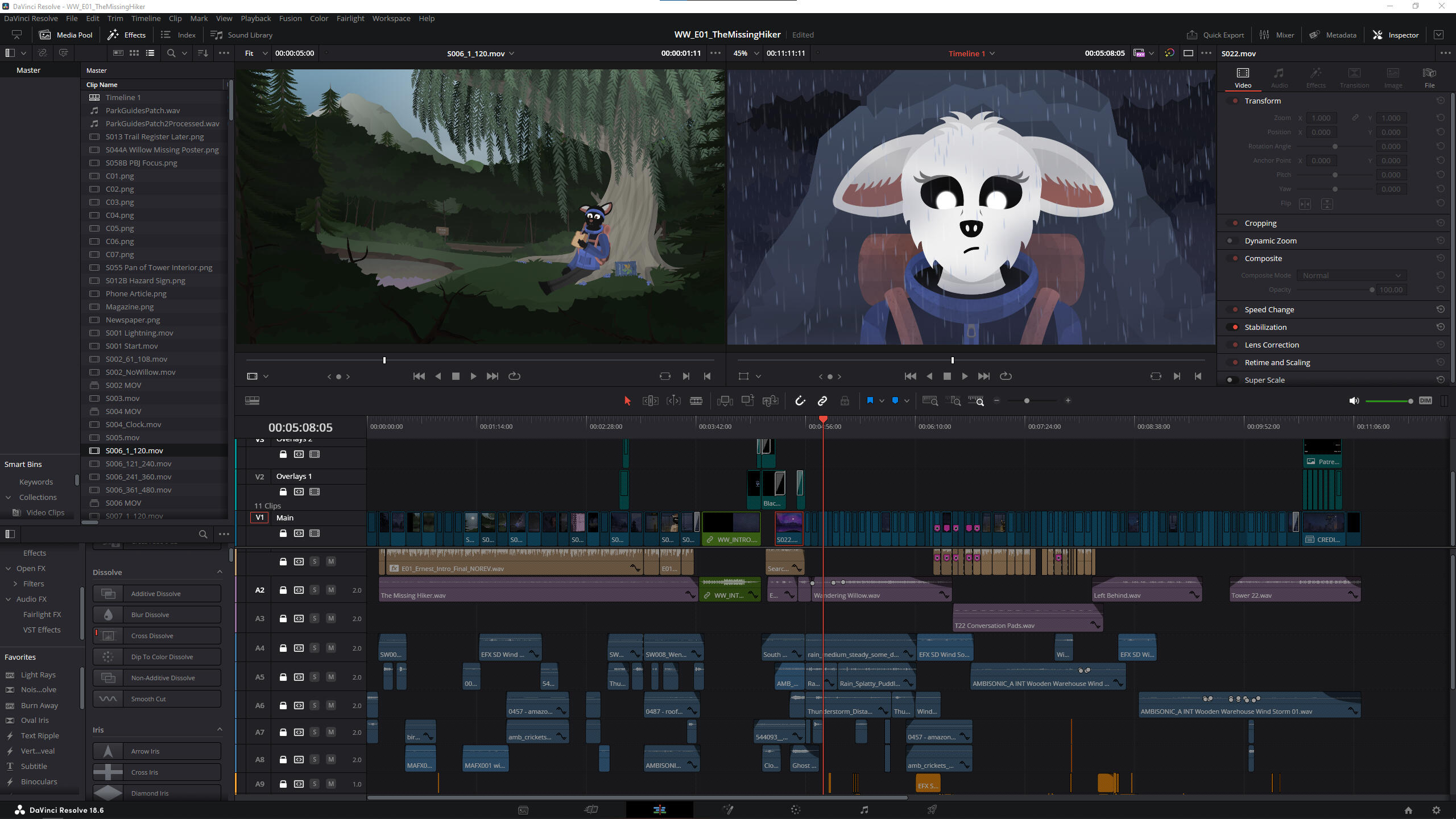
Editing videos together is the final stage of the production process where all of the animations, sounds, music, and voice acting come together to create a completed project. I manage clip and sound transitions, compositing, audio equalization, and any remaining audio and visual effects at this point.For editing videos together, I use Davinci Resolve.Shown here: Part of the animation timeline for episode one of Where's Willow? - A Firefly City Story, my previous animated series which was edited in the same way Pilot Light will be.
Research
Research for this series was extensive, and I looked at several different mediums to find information. With how untrustworthy the internet is these days, I went for the most direct path to the source of what I was studying whenever possible (and affordable). The different categories are separated by medium and described further below, with each item in alphabetical order. This isn't everything, but it's the most important, core stuff. It is intentionally not a bibliography; it's a description of the research process.Note: For non-web sources, links go to either official websites, Goodreads (not a referral link), or a Wikipedia overview of the source in question. The links themselves are not what I used for research.Note: As I have stated in other places, at no point, and in no place, was any form of generative AI used in any aspect of production (and it never will be). That includes research.
PRINT/LITERARY RESEARCH:For print and literary research, I tried to look at primary sources (first-hand accounts, autobiographies, etc.) whenever possible. If not, I looked at secondary sources with credible citations at least. • 20 Hrs. 40 Min.: Our Flight in the Friendship by Amelia Earhart. This book was useful for building Elsie's character, as she was inspired in part by Earhart. It was particularly valuable as a primary source because it was a great example of Earhart's sense of humor, outlook on life and aviation, and approach to different situations. • Amelia Earhart: The Thrill of It by Susan Wels. Though it is a secondary source, this book was still very comprehensive and also useful for building Elsie's character. It's also physically rather large when opened (it's the only hardcover book in this list); I had a hard time fitting it on my desk lol. • Child of the Sea; and Life Among the Mormons, a primary source by Elizabeth Whitney Williams who was keeper of Beaver Island Light and Little Traverse Light in the 19th century. While only truly topical for my needs in the last ten pages (I was only reading for the lighthouse-keeper-related excerpts), it was still an interesting look into keeper life in the past. It helped a bit with building Alice's character. • Liberty weekly magazine issues: February 9th, 1929; February 16th, 1929; February 23rd, 1929. They are actual magazines from the era I was studying and thus were primary sources in this context. I digitized my three copies of these (the ink may have lead in it and I want to preserve them anyway lol). They were useful for advertisement, dialogue vernacular, and art style references. • The 1831 Introduction to Mary W. Shelley's Frankenstein (written by Shelley herself). Mary Shelley is another major part of the inspiration for Alice's character, and this introduction (though comparatively short) was a big part of how I shaped Alice's personality, choices of language, and interests. Though Shelley lived long before anyone else that influenced the characters of Pilot Light, she still has relevance as someone who traveled often and put much of what she experienced into allegorical stories that expressed what situations she went through and how she felt about them. • The Fun of It by Amelia Earhart. Another primary source and (again) useful for building Elsie. It admittedly repeats a lot of what's in 20 Hrs. 40 Mins. but was still a good read that added some extra context as Earhart wrote it a few years later right before her solo flight across the Atlantic. • Titanic Survivor by Violet Jessop and John Maxstone-Graham. This is a primary source as it was written by Violet Jessop herself (a stewardess and V.A.D. nurse who survived a collision on the RMS Olympic with the HMS Hawke, the sinking of the RMS Titanic, and the sinking of the HMHS Britannic). There is some heavy editing done by John Maxtone-Graham, but he actually met with Jessop, was quite credible and knowledgeable about ocean liner history himself, and was very well-respected in that field of study. This book was useful in building Jessie's character, as she was inspired in part by Jessop (if the name hadn't clued you in, lol). • Women Who Kept the Lights: An Illustrated History of Female Lighthouse Keepers by Mary Louise Clifford and J. Candace Clifford. Though it is a secondary source, it was thorough and still useful for learning about women who were lighthouse keepers in the past, some common experiences, and what the work was like. It helped build Alice's character, as she is partly based on this archetype, particularly in reference to keepers such as Ida Lewis, Elizabeth Williams, and Abbie Burgess.
WEB RESEARCH:I tried to limit web research as much as possible because, well... it's full of slop these days. Most of what I used the internet for was either very definitive stuff like some digitized literature, calendar dates, words, or to point me to more specific print or IRL sources.• The following four websites were useful for quick checks on whether the main three characters, being from the 1920's, would actually use certain words, phrases, idioms, and slang (also by region, such as England vs USA). While they do not guarantee accurate vernacular, they were still helpful to an extent, especially when checked against each other for consensus. It's sort of surprising how hard it is to research this, as most 1920's speech guides focus on Prohibition era/gangster/flapper topics, which really isn't even remotely close to the full picture of culture at the time. It can be a little frustrating.
• Google Ngram Viewer
• Green's Dictionary of Slang
• Historical Dictionary of American Slang
• Online Etymology Dictionary• The following YouTube channels were great for getting in the right mood to work on the show, and they were also good starting points for further research into some interesting and useful topics. Firefly City Stories is not affiliated with them, but I highly recommend checking them out.
• Astrum
• Big Old Boats
• Brick Immortar
• Mustard
• Ocean Liner DesignsNote: While I personally care a lot about it, for the show itself vernacular was not a huge priority, as modern audience understanding was more important than historically-accurate dialogue which may be jarring to decipher while actively watching.
REAL LIFE RESEARCH:For objects, technology, and style information, I tried to prioritize looking at the real thing in person whenever possible (pictures and videos on the internet were not always trustworthy or of an appropriate license). If I could see it with my own eyes and take pictures of the exact angle, detail, or mechanism I needed information about, I preferred that. • Cincinnati Museum Center (also known locally as Union Terminal). A visit here was great for seeing some time-period items and an iconic Art Deco building. Cincinnati (my home town) is full of great examples of Art Deco, so I got lucky there. There are also dinosaur skeletons so uhh yeah, lol. • Kodak Brownie Target Six-16 camera. While the one I bought was from ~1946-1951 (not the 1930's; it was mislabeled in the listing), it still has the same form factor as many from earlier eras. This camera allowed me to get a better understanding of photography for the time period (mainly for writing Jessie's photography scenes). I don't have film for it, but if I did it technically still would work as a usable camera. • National Museum of the United States Air Force. I visited this place to see some early 20th century aircraft in person and get reference photos. My favorites were the WW1-era Curtiss "Jenny" and an autogyro from the 1930's (Amelia Earhart called these "whirligigs," and allegedly didn't like them very much due to their clunkiness, lol). • The Cincinnati Observatory. This is a local observatory that has a very long and rich history, as well as some very nice architecture. It was helpful for understanding some of the observatory and astronomy infrastructure that would be relevant in different time periods. • Years ago (2019), I visited Carillon Park and the Engineer's Club of Dayton in Dayton, Ohio, where I saw both the authentic Wright Flyer III from 1905, as well as a sculpture of it. The sculpture has since been relocated a few blocks away from where I was in the photo with it at the time. While not directly related to Pilot Light, it is part of what got me interested in depicting a story about early aircraft and exploring.
OTHER INTERESTING THINGS:These weren't necessarily for research, but more for sentimentality and curiosity: • I was able to get some genuine Titanic artifacts such as a tiny piece of deck flotsam retrieved in 1912 and some coal retrieved in 1994. Both pieces are very small, essentially flakes, but they are still interesting and moving artifacts to have.
• I purchased a replica of Violet Jessop's Titanic crew survivor's pendant, which inspired Jessie's lucky pendant. I also got a strawberry pin that's sort of like Elsie's, but it's just a general product that I found randomly and not an antique.
• I tried my hand at baking a water pie from the 1920's/1930's. It turned out perfectly (according to comparison with other people's results), but still was... questionably appetizing. The filling wasn't my favorite but the crust was very sweet, almost like a cookie.Note: Aside from Jessie's references to Violet Jessop, the Titanic isn't even really relevant to what I was writing in the show. It's from the wrong decade (1910's), and unlike with people, technology needed to line up better. My fictional SS Aberratica is more inspired by the real SS Bremen and the SS Île de France. If you're researching ocean liners like I was though, you're bound to run into Titanic/Britannic/Lusitania/etc. discussions at some point, for obvious reasons. Also, I made it a point not to directly reference any real tragedies in Pilot Light out of respect; all accidents you see in the show are more based on common hazards or intentional test/scuttling incidents in which no one was harmed (such as the USS Arkansas myth).
About the Creator: Mitch Ran
Hi! My name is Mitch Ran, and I’m a graphic designer, 2D rig animator, and comic artist from the Cincinnati, Ohio area. My other pastimes include creative writing, music production, voice acting, photography, and scenery artwork.Before working on Firefly City Stories, my main creative project has been WebCanids comics, a gag-based comic featuring canids such as foxes, wolves, and coyotes in cute and funny adventures. I still create this comic alongside FCS, and share new ones every week! I have also made several fan animations for video games that I enjoy on my old fan art channel.